
From Scrolling to Struggling: What Excessive Gaming and Social Media Are Really Telling Us About Youth Wellbeing
Let us get one thing out of the way: playing video games is not inherently a problem. Neither is spending time on social media. Billions of people do both, daily, without their lives falling apart. The question that matters — and the one that youth workers are increasingly having to grapple with — is not whether a young person uses these platforms, but what role they are playing in their life.
When a 17-year-old spends four hours a day gaming, that number alone tells you almost nothing. The more important questions are: Is this their main social interaction? Are they skipping meals? Have they withdrawn from activities they used to enjoy? Do they become markedly distressed when access is removed? Are they sleeping? Do they talk about it, or has it become a closed-off world that no one is allowed to enter? These are the signals that shift the picture from hobby to concern — and they are signals that a youth worker who is paying attention is well-placed to notice.
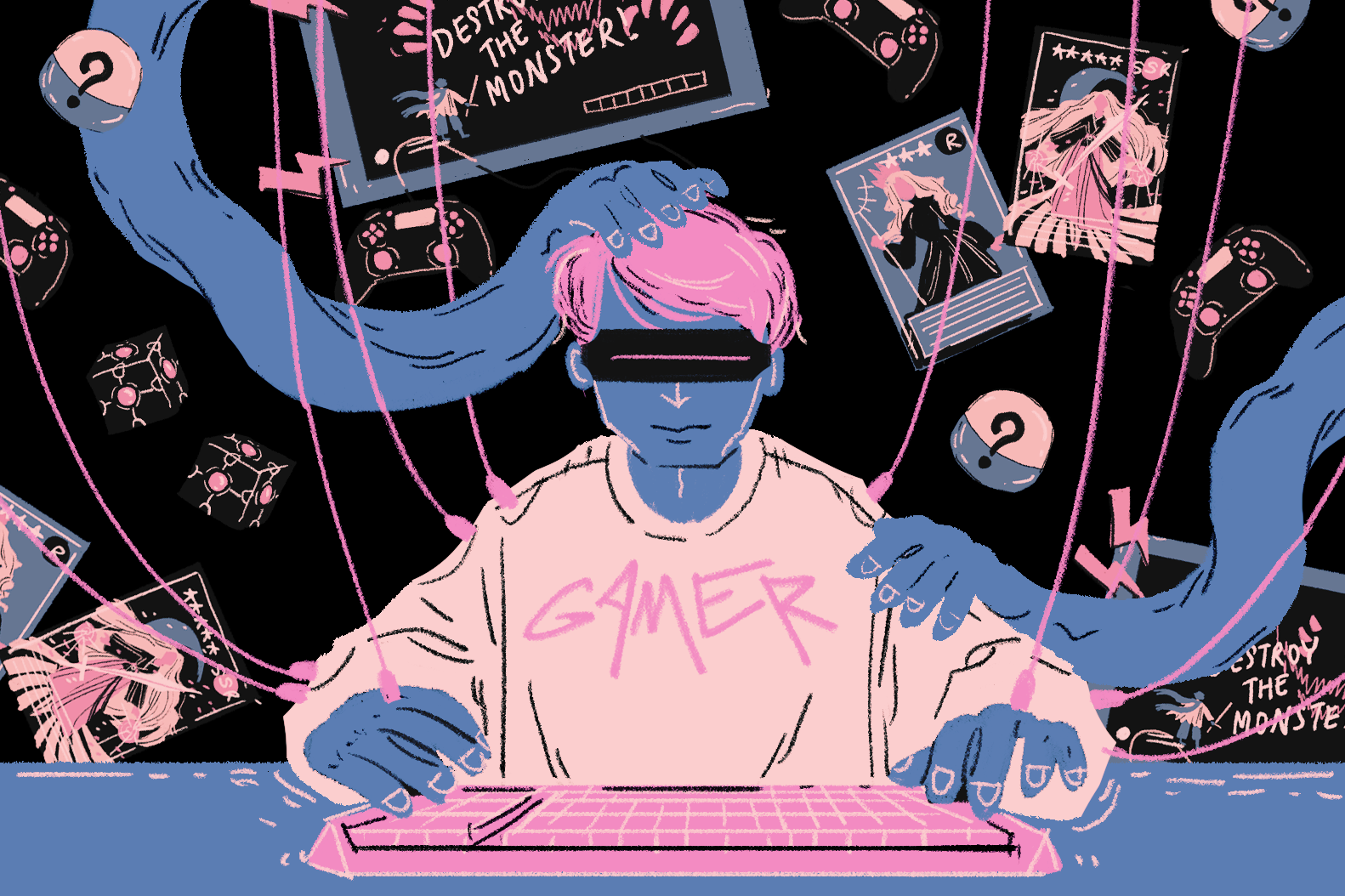
A Pandemic Legacy
The RECOVER project pays particular attention to two phenomena that emerged sharply during and after the COVID-19 pandemic: excessive gaming disorder and problematic social media use. When schools closed, social lives moved online, and many young people who had previously used digital platforms moderately found themselves with no other way to connect, entertain themselves, or escape the anxiety of lockdown. Screens became lifelines. For some young people, that pattern became entrenched long after the restrictions lifted.
This is not a moral failure. It is a predictable response to an abnormal situation. But understanding where it came from does not diminish the need to address it now, years later, when many young people are still carrying patterns they developed in crisis conditions and have not found a way out of.
When Use Becomes Disorder
Excessive gaming disorder was recognised by the World Health Organisation as a clinical condition in 2019 — before the pandemic made it significantly more prevalent. It is characterised not by the number of hours played but by the impact on functioning. When gaming takes priority over sleep, education, relationships and physical health over an extended period — and when the person continues despite recognising these consequences — that is when it crosses into territory that warrants attention.
It is worth understanding why gaming becomes excessive in the first place. For many young people, online games offer something that real life currently does not: clear goals, immediate feedback, a sense of competence and progress, and a community of peers who share an interest. When a young person’s school life feels like failure, their social life feels threatening, and their home life feels chaotic, a game where they are skilled and respected is not an escape from life so much as a refuge from an environment that is not meeting their needs. Addressing the gaming without addressing the underlying unmet needs tends not to work.
The Social Media Dimension
Social media presents a different but related challenge, particularly for young women. Research consistently shows that girls and young women between 16 and 25 are significantly more likely than their male peers to report symptoms of anxiety and depression linked to social media use. The mechanisms are fairly well understood: social comparison, the performance of a curated identity, exposure to comment sections and unsolicited feedback, and the algorithmically amplified cycle of seeking validation and experiencing the highs and lows of receiving it — or not.
What is less often discussed is how platforms are specifically designed to exploit the parts of adolescent psychology that are most in flux — identity, belonging, self-worth. These are not incidental features. They are the product of deliberate design choices made by platforms whose business model depends on maximising time spent. Young people are not weak for being affected by this. They are human, at a particularly vulnerable stage of development, in an environment that has been optimised to hold their attention at any emotional cost.
The research also points to something more specific: the relationship between social media and body image, particularly for teenage girls. Exposure to heavily filtered and curated images of bodies, faces and lifestyles correlates with increased rates of disordered eating, low self-esteem, and depressive symptoms. This is not a peripheral issue for the RECOVER project — it is central to understanding why young women between 16 and 25 are so significantly overrepresented in youth mental health statistics.
The Danger of Moral Panic
For youth workers, the risk is to respond to these situations with alarm or moral judgment. Confiscating a phone or lecturing a teenager about screen time is rarely effective and almost always damages trust. It positions the adult as an adversary rather than an ally, and it communicates something that is not particularly true — that the technology itself is the problem, rather than the circumstances in which the young person is using it.
What tends to work better is curiosity. Not interrogation, but genuine interest. What does gaming give you that real life doesn’t right now? Who do you connect with online? What happens for you when you try to step away? How do you feel after scrolling versus before you started? These questions do several things simultaneously. They show respect for the young person’s experience. They open a space for honest reflection that a young person may never have had with an adult before. And they often reveal the underlying story — the loneliness, the social anxiety, the need for control or achievement or belonging — that the digital behaviour is responding to.
What Youth Workers Can Actually Do
These questions are not soft alternatives to action — they are the action. The RECOVER toolkit includes specific guidance on how to raise these topics with young people — not as accusation, but as inquiry. Youth workers are trained to distinguish between a young person who uses gaming or social media as a coping mechanism for genuine underlying distress (and who needs support with that distress, not just a reduction in screen time) and one who has simply found an interest that adults find suspicious.
They are also trained to know when they are looking at something that requires specialist intervention — when the pattern of use has moved beyond what a supportive conversation can address, and when a referral to a professional is the most helpful thing they can offer. That distinction — between what is within the scope of youth work and what is not — is one of the most practically valuable things the project provides.
Reading the Signal
Digital behaviour is increasingly a window into emotional wellbeing. A young person who disappears into gaming for weeks is communicating something. A young person who posts obsessively and checks compulsively for responses is communicating something. A young person who abruptly deletes all their social media and goes silent is communicating something. The content of the communication matters less than the fact of it — these are signals, and they deserve to be met with attention rather than alarm, curiosity rather than judgment, and support rather than sanction.
Learning to read those signals, rather than simply react to them, may be one of the most valuable skills a youth worker can develop in the years ahead. The technology will keep changing. The underlying human needs that drive its use will not.
